When to Consider Sciatica Treatment in Lichfield
Sciatica can creep up slowly, starting as the odd twinge in your lower back or a strange tingling down the leg. Before long, it might be affecting how you sit, stand, walk, or sleep. Knowing when to seek sciatica treatment in Lichfield can make a real difference to how quickly you recover and how much it disrupts your everyday life.
At The Chiropractic Studio in Lichfield, we see many people who are unsure whether their symptoms are "serious enough" to need professional help. In this article, we will explain the early warning signs of sciatica, common causes, when self-care is not enough, and how chiropractic care, massage, and acupuncture can all play a role in your recovery.
Spotting the First Warning Signs of Sciatica
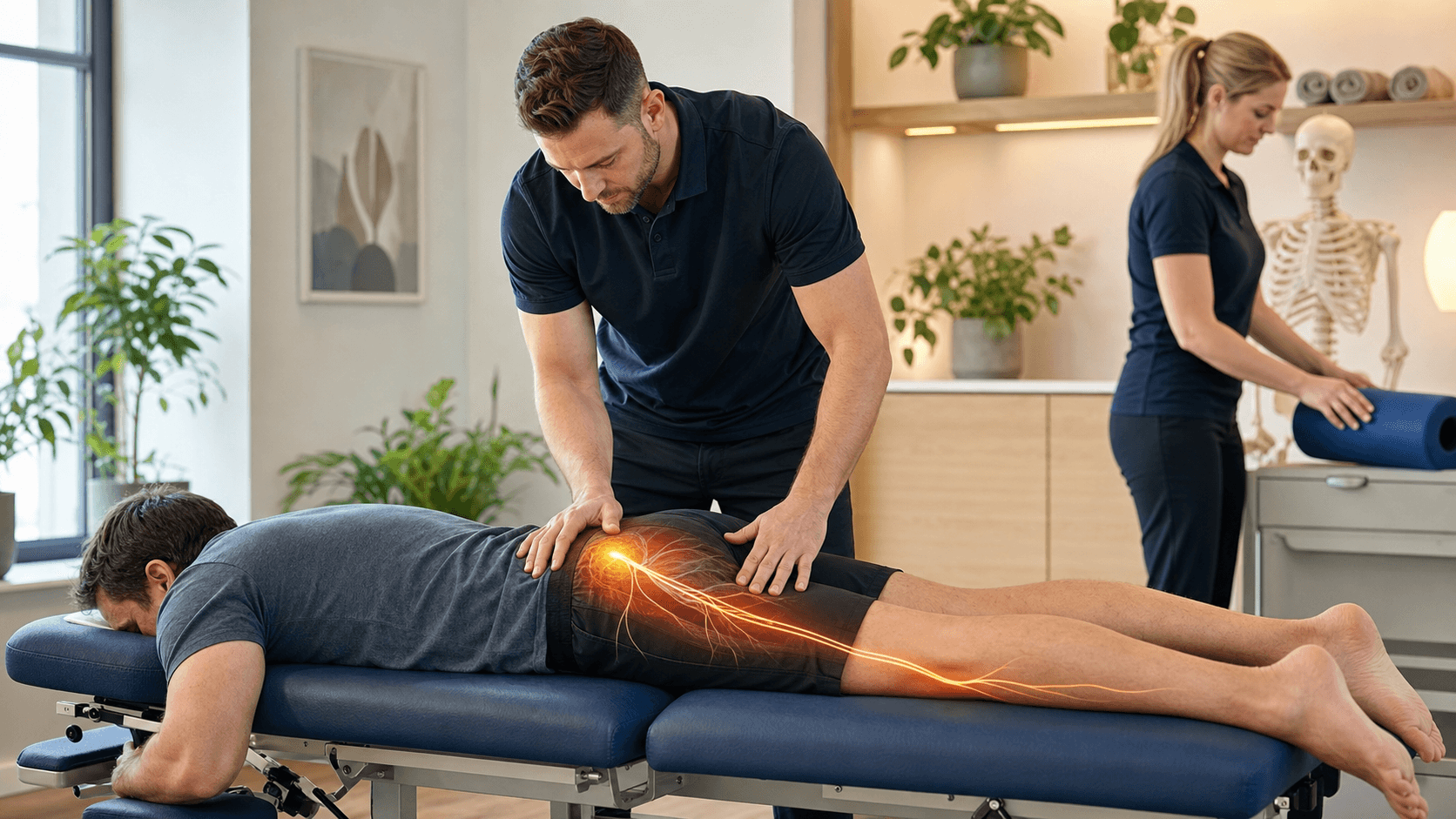
Sciatica is irritation or compression of the sciatic nerve, the large nerve that runs from the lower back through the hips and down the back of each leg. When this nerve is irritated, it can send pain and other symptoms anywhere along its path, not just in the lower back.
Early signs are often easy to brush off. You might notice:
- Occasional sharp, shooting pain from the lower back or buttock into the leg
- Tingling, pins and needles or "electric" sensations down the leg or into the foot
- Intermittent numbness or a feeling that one leg is not quite right
- Pain that appears after sitting, driving or bending, then eases when you move
Because these symptoms can come and go, it is tempting to ignore them and hope they settle on their own. The problem is that ongoing irritation of the sciatic nerve can lead to more intense pain, persistent numbness or weakness, and longer recovery times. Early assessment gives us the chance to address the underlying problem before it becomes more severe or long term.
Common Causes of Sciatica in Everyday Life
Sciatica does not only happen after dramatic injuries. In and around Lichfield, we often see triggers linked to very normal daily routines. Long hours at a desk, working from home at the kitchen table, or regular commutes around Staffordshire can all place extra strain on the lower back.
Typical contributors include:
- Desk-based work with poor workstation set-up
- Long periods of driving, especially with limited breaks
- Repeated lifting, twisting or manual handling at work
- Carrying and feeding young children, often on one side of the body
Over time, poor posture, weak core muscles and reduced flexibility in the hips and spine can mean that the lower back takes more load than it should. This extra stress can irritate the joints, discs and soft tissues that sit close to the sciatic nerve.
Existing conditions can also play a part, such as disc bulges, age-related spinal changes like arthritis, or previous injuries that never fully settled. Pregnancy-related changes in posture and ligament flexibility can sometimes contribute too, especially when combined with lifting a growing baby or toddler.
When Self Care Is Not Enough Anymore
When sciatica symptoms first appear, there are sensible steps you can try at home. Gentle movement is usually better than complete rest, so short walks, changing position regularly and avoiding long spells of sitting or lying still can help. Some people find heat packs soothing on tight muscles, while others prefer cold packs over the painful area for short periods.
Simple home strategies might include:
- Breaking up sitting time with frequent standing or walking breaks
- Gently stretching the hips and legs within a comfortable range
- Using a cushion or rolled towel to support the lower back when sitting
- Sleeping on your side with a pillow between your knees to keep the spine aligned
However, there are times when self-care alone is no longer enough. You should consider professional sciatica treatment in Lichfield if your pain has lasted more than a few days without improvement, if symptoms are gradually worsening, or if you are struggling to sleep because of pain or leg discomfort. Difficulty carrying out normal activities such as walking, dressing, or driving is another clear sign that it is time for a proper assessment.
There are also urgent warning signs that need immediate medical attention. These include new loss of bladder or bowel control, severe or rapidly worsening weakness in the legs, or sciatica symptoms that begin after a significant fall, accident or direct injury to the back. These signs can indicate a more serious problem and should not be ignored.
How Chiropractic Care Can Help Sciatica
At The Chiropractic Studio, our GCC-registered chiropractors start with a detailed assessment to understand what is driving your sciatica. We take a full case history, asking about your symptoms, work, hobbies and previous injuries. We then look at your posture, how your spine and joints move, and carry out neurological and orthopaedic tests to check nerve function, strength and reflexes.
If chiropractic care is appropriate for you, treatment is tailored to your specific findings. Gentle techniques may be used to improve movement in the spine and pelvis, helping to reduce pressure on the irritated sciatic nerve. These can include spinal adjustments, joint mobilisation and soft tissue work to ease tight muscles that are contributing to the problem.
We also place strong emphasis on what you can do between sessions. Personalised exercise plans can help to build strength in the core and hip muscles, support the spine, and improve flexibility. Posture advice and practical tips for sitting, driving, lifting and sleeping are important too, so you are not repeatedly aggravating the same areas. This combination aims not only to ease current pain but also to reduce the likelihood of future flare-ups.
Massage, Acupuncture and Holistic Support
Sciatica often involves more than just one irritated nerve. Muscles in the lower back, hips and legs can become tense and overworked as the body tries to protect the painful area. Deep-tissue massage can be very helpful here, easing tight muscles, improving circulation and supporting better movement around the spine and pelvis.
Acupuncture can also be used alongside chiropractic care for some people with sciatica. By placing very fine needles in specific points, acupuncture aims to help reduce pain, calm irritated nerves and encourage relaxation. Many patients find this especially helpful when pain is affecting their sleep or causing them to feel constantly on edge.
At The Chiropractic Studio, we take a whole-person approach. That means looking not only at the painful area but at your overall movement, daily habits and stress levels. Advice on pacing activities, simple home exercises, ergonomic changes to your workspace and strategies for managing tension can all play a part in your long-term improvement.
Choosing Sciatica Treatment in Lichfield with Confidence
When you are in pain, choosing where to go for help can feel overwhelming. A few key points can make this decision easier. It is sensible to look for professional registration, clear information about the types of care offered and experience in working with people who have sciatica and other back-related problems. You should also expect a clinic to explain what they are doing and why, in terms you can easily understand.
At your first visit to The Chiropractic Studio in Lichfield, we begin with a thorough consultation and examination so we can understand your symptoms and goals. We explain our findings, discuss whether chiropractic, massage, acupuncture or a combination may be suitable, and outline a tailored plan that fits your situation. Our aim is always to help you make informed choices about your health, so you feel confident about the next steps.
If sciatica pain is affecting your work, interrupting your sleep, changing the way you walk or stopping you from enjoying everyday life around Staffordshire and the West Midlands, it is worth taking it seriously. Acting sooner rather than later often means more options, a smoother recovery and a better chance of getting back to the activities that matter to you.
Take The First Step Towards Lasting Sciatica Relief
If your sciatic pain is holding you back, we are here at The Chiropractic Studio to help you move more comfortably again. Our tailored approach to sciatica treatment in Lichfield focuses on reducing pain, improving mobility and supporting long-term recovery. Book an appointment today so we can assess what is driving your symptoms and create a plan that suits your lifestyle. If you have any questions before you get started, simply contact us and we will be happy to talk things through.