Feel Straighter, Move Freer: Start with a Simple Check
Posture is not just about standing up straight. It is about how your body copes with everyday life. Long drives around Lichfield, hours at the laptop and scrolling on your phone can slowly change the way you sit, stand and move. Over time, this can leave you feeling stiff, tired and older than you are.
Good posture helps your body share load more evenly, so your joints, muscles and nerves are under less strain. It can make simple things like walking through Beacon Park, gardening or playing with the kids feel easier and more comfortable. When your body is better aligned, you often move more freely and breathe a little better too.
You do not need special equipment to start working on your posture. A couple of quick checks at home can give you a useful snapshot of how your body is lining up. From there, you can decide whether a few simple changes are enough or whether it might be worth booking a more detailed posture assessment in Lichfield for tailored help.
How Poor Posture Shows up in Daily Life
Most people do not notice posture changing until something starts to ache. Certain patterns tend to appear again and again with modern work and home life. We often see:
- Rounded shoulders from leaning into a laptop
- Forward head posture from looking down at phones and tablets
- Stiff, tight lower backs from long desk hours or driving
- A sway in the lower back when standing for long periods
When your posture drifts in these ways, you might feel:
- Recurring headaches, often starting in the neck or base of the skull
- Tightness across the shoulders and upper back
- A dull mid-back ache on longer car journeys
- Hip discomfort after sitting or gardening
- Fatigue when standing at events, queues or barbecues
There are also quieter warning signs that can be easy to brush off. You might notice one shoulder always carries the heavier bag, or your clothes sit unevenly across your waist or shoulders. You may feel you stand "crooked" in photos or that your head always tilts slightly to one side.
It helps to remember that posture is not frozen in place. It changes with your stress levels, sleep, activity, mood and even how busy your week has been. It is not just about "having a bad back" or forcing yourself to sit bolt upright. Instead, it is about how your body adapts to the habits and loads you repeat each day.
Quick Mirror and Wall Tests You Can Do at Home
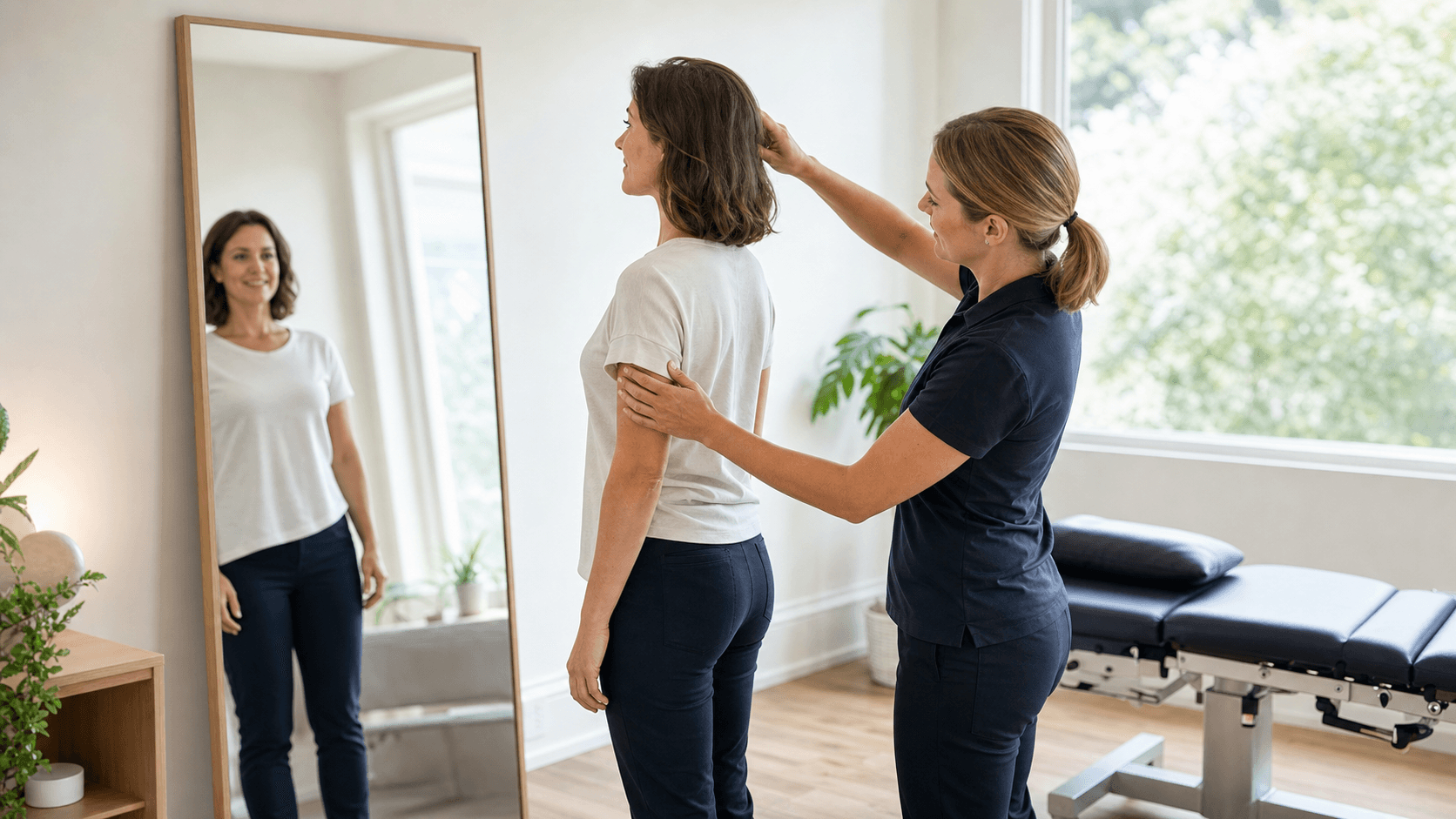
A couple of simple checks can show you how your body is lining up from head to toe. Take your time, breathe and try not to "pose" for the mirror. You want your natural stance.
For a basic full-body mirror check:
- Stand with your feet hip-width apart, weight evenly on both feet
- Let your arms hang loosely by your sides
- Look at shoulder and hip height. Does one side sit higher?
- Notice if your head is centred over your body or drifting forward or to one side
- Check whether your hands hang at the same level
Next, try a gentle wall test with a flat wall:
- Stand with your heels a few centimetres from the wall
- Let your bottom and upper back rest lightly on the wall
- Notice how close the back of your head is to the wall. Do you need to tilt it back to touch?
- Slide a hand behind your lower back. Is there a big gap or a gentle curve?
Then do a seated desk check, which is handy for home working:
- Sit with your feet flat on the floor, not tucked under the chair
- Make sure your back has some support, not slumped away from the chair
- Check that your hips are level with or slightly above your knees
- Look at your screen. Is it roughly at eye level, or are you looking down sharply?
Passing these checks usually means your head sits fairly over your shoulders, your shoulders and hips are level and your lower back has a gentle curve rather than a deep arch. Failing might look like a head held far forward, very rounded shoulders, clear height differences between sides or feeling crooked every time you look.
If you repeat these checks over a few weeks and keep spotting the same issues, or if they match up with ongoing pain or tightness, that is a sign it may be time to explore posture correction in Lichfield with a professional assessment.
Simple Daily Tweaks to Support Better Posture
You do not need a full life overhaul to start helping your posture. Small, steady changes can give your muscles and joints a break and encourage a more comfortable position.
Helpful daily tweaks include:
- Setting a reminder every 30 to 45 minutes to stand, stretch or walk for a minute
- Alternating between sitting and standing where possible, for example at a kitchen counter for short tasks
- Adjusting chair height so your feet rest flat and your knees are roughly at hip level
- Lifting your screen closer to eye level using books or a stand
A short movement routine can fit around work, family and summer activities:
- Chest-opening stretch after driving, gently pull your shoulders back and open your chest for 20 to 30 seconds
- Shoulder blade squeezes at your desk, draw the blades gently together and down as if tucking them into your back pockets
- Hip flexor stretches after gardening or longer walks, take a small lunge stance and lean forward until you feel a gentle stretch in the front of the hip
Lifestyle habits also play a part in how easy it is to hold a healthier posture. Try to:
- Carry lighter bags or split weight between both sides
- Choose supportive footwear for days when you plan to walk around Lichfield
- Drink water regularly, especially in warmer weather, as tired, dehydrated muscles can feel tighter
Consistency matters much more than being perfect. Slight improvements repeated day after day can slowly reduce the strain on your spine, joints and muscles and can make your posture feel more natural rather than forced.
When Self-Checks Are Not Enough
At-home checks are a great start, but they are not the full story. There are clear signs that it is time to book a professional posture assessment rather than trying to manage everything on your own.
Red flags to look out for include:
- Pain that is getting worse or has lasted more than a few weeks
- Pins and needles, numbness or burning sensations
- Weakness in an arm, leg or grip
- Pain that wakes you at night or stops you enjoying normal activities
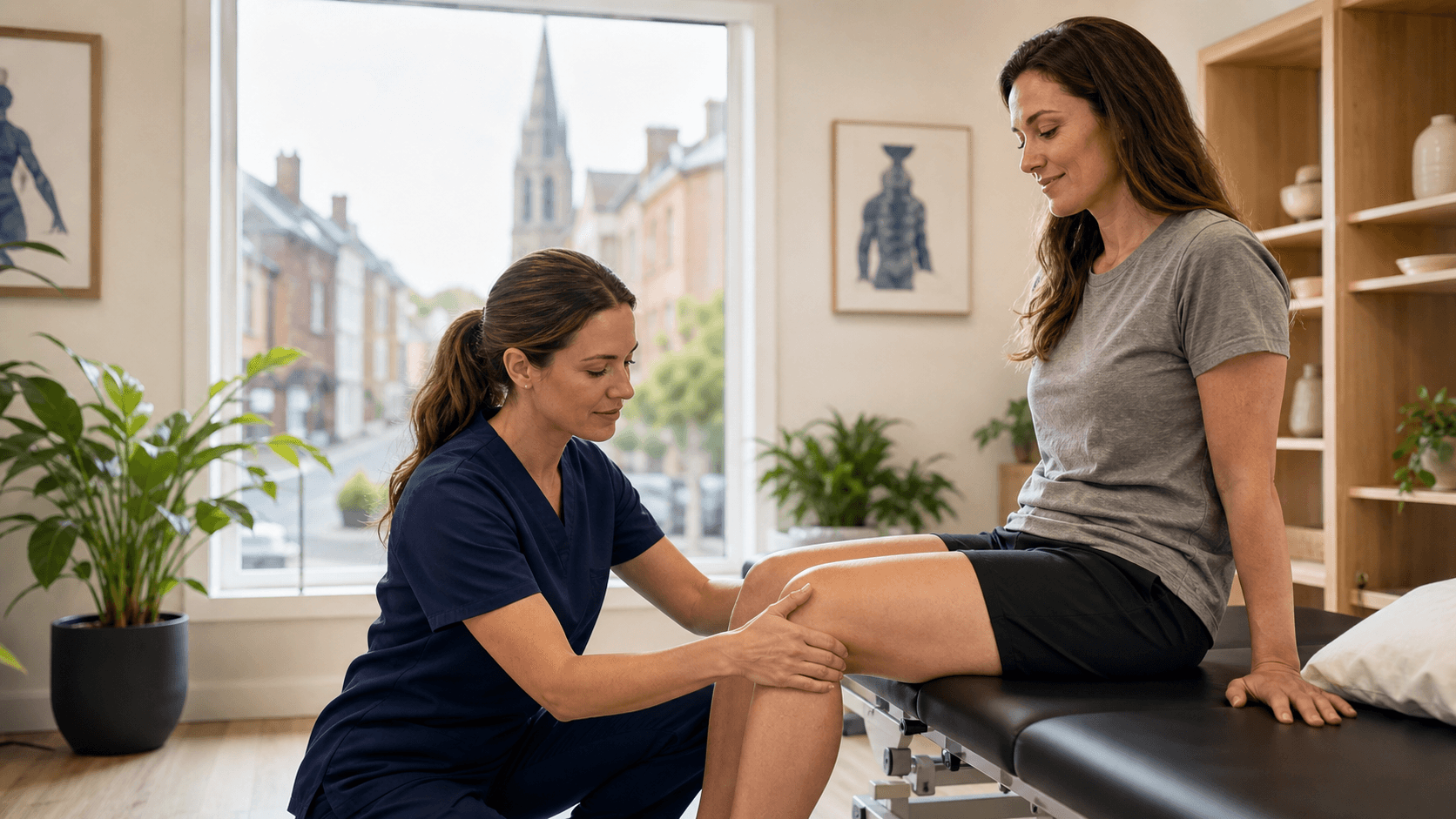
A chiropractic posture assessment looks in more detail at how your spine, joints and muscles are moving. It aims to identify the underlying reasons your posture has changed, not just how it looks. This can include movement testing, checking how different areas of your body work together and exploring what your normal day involves.
Posture correction in Lichfield at The Chiropractic Studio is about whole-person care, not quick fixes or one-size routines. Work setup, hobbies, sports and stress levels can all shape how your body feels, so these are taken into account when planning care and suggesting changes.
Many people feel nervous before a first appointment, especially if they have had pain for a while. Care is gentle and hands-on, and there is space to ask questions and talk through worries. The aim is always to help you understand your body, feel more in control and leave with clear exercises and advice that match your goals and lifestyle.
Take The Next Step Towards Healthier Posture Today
If you are ready to address daily aches and build healthier habits, we are here to help you with expert posture correction in Lichfield. At The Chiropractic Studio, we will assess your posture, listen to your concerns and create a plan tailored to your lifestyle. To arrange your first appointment or ask any questions, simply contact us and we will get back to you promptly.