Stop Ignoring That Knee Twinge: Why Acting Now Matters
Knee pain that comes and goes is easy to shrug off. A twinge on the school run, a dull ache after walking into Lichfield, a bit of stiffness after weekend sport, and it is tempting to hope it will settle on its own. The problem is that small niggles often build up quietly until they stop you in your tracks.
As the weather turns cooler and wetter, many people walk more on uneven, slippery ground, stand at the touchline for longer, or get back into regular exercise after a slower summer. Old trainers, hard pavements and cold joints can all add extra strain to knees that are already under pressure. Carrying on as normal, or relying on painkillers alone, can let a simple issue turn into something that takes far longer to calm down.
At our chiropractic clinic in Lichfield, we look at the whole person, not just the sore knee. Your posture, the way your feet land, how your hips and lower back move, and your daily habits all affect how much stress reaches the knee joint. In this article we will walk through the key red flags that mean you should not wait, when to choose urgent care instead of local treatment, what you can safely do while you are waiting to be seen and how focused knee pain treatment in Lichfield can help you get moving again.
Red Flags in Knee Pain You Must Not Ignore
Some knee problems are more than just a simple strain. There are clear warning signs that mean you should get prompt, professional assessment.
Strong red flags include:
- Sudden, severe pain after a twist, fall or tackle
- Hearing or feeling a pop, snap or tear in the knee
- The knee giving way or feeling very unstable
- Rapid, marked swelling within a few hours
A loud pop or a feeling that something has gone in the joint may point to a ligament or meniscus injury. These structures help keep your knee stable and well cushioned. If they are damaged, pushing through pain can make things worse and delay healing.
Trouble putting weight through the leg is another warning sign. If you cannot walk more than a few steps, keep needing to catch yourself because the knee gives way or cannot fully bend or straighten the joint, there may be structural damage that needs timely care.
You should also pay close attention to:
- Obvious swelling, warmth or redness
- A knee that suddenly looks a different shape
- Pain that wakes you at night or never eases
- Fever, feeling generally unwell or unexplained weight loss
Fast swelling, heat or redness can be linked with a fracture, infection, gout or a strong inflammatory flare. These problems need urgent medical input, not just manual treatment. If knee pain comes with night pain, fever, feeling run down or a history of serious illness, it is important to rule out more serious causes before anyone works hands-on around the joint.
When to Seek Urgent Care Versus Local Treatment
Not every sore knee needs a trip to A&E, but some clearly do. Getting this decision right can save time and worry.
You should seek urgent medical care if:
- You have had a major fall, car accident or direct blow to the knee
- The knee looks deformed or the leg is at an odd angle
- You cannot put any weight on the leg at all
- There is a deep wound over the knee or shin
- You have severe pain with fever and you feel very unwell
In these cases it is safer to be checked for fracture, serious ligament tears or infection as soon as possible.
Knee pain treatment in Lichfield can be helpful when:
- Pain has built up over days or weeks, not seconds
- There is mild to moderate swelling, but you can still walk
- The knee feels stiff in the morning or after sitting
- It aches with stairs, hills, walking or sport but settles with rest
Here, a local practitioner can assess the joint and the rest of your lower body, then decide on the most suitable approach.
At a chiropractic clinic, assessment usually includes a full history, checking how and when the pain started, your activity levels, previous injuries and general health. We would then look at your posture, how you walk, and how your hips, ankles and lower back move, as well as hands-on tests around the knee itself. If we feel you need an X-ray, scan or GP review first, we will explain why and guide you towards that.
As the year moves into autumn, people often spend more time on wet pavements, muddy pitches and cold sidelines. Small knee issues that you hardly noticed in summer can begin to shout once the ground is uneven and joints feel stiffer. Acting before winter sets in can stop things spiralling.
Safe Steps to Take While You Wait for Your Appointment
While you are waiting to be seen, you want to protect your knee without wrapping yourself in cotton wool. Total bed rest can lead to muscle loss and extra stiffness, but pushing through pain is rarely a good plan.
Try to:
- Shorten walks and spread them through the day
- Take more breaks from standing at work or at home
- Avoid deep squats, lunges and kneeling on hard floors
- Use handrails and take stairs slowly, one step at a time if needed
For comfort in the first couple of days after a new flare or strain, a cool pack wrapped in a thin cloth on the sore area may ease pain and swelling. Later on, gentle warmth can sometimes help if the main problem is stiffness rather than hot, angry swelling. After you have been on your feet, resting with the leg supported on a cushion so the knee is slightly raised can also feel helpful.
Supportive shoes can make a bigger difference than many people expect. Worn-out trainers, soft slippers and thin soles often let the foot roll or collapse, which then loads the knee. A firm, cushioned shoe with a secure heel and decent grip is usually a better option.
Some people find relief with over-the-counter pain relief or anti-inflammatory tablets or gels, but these are not suitable for everyone. It is always best to check with a pharmacist or GP if you have other health conditions, allergies or take regular medication. While you wait for assessment, it is wise to avoid strong stretching, deep self-massage over swollen tissue or copying intense online exercise routines that claim to fix every knee.
Gentle, pain-free movement is usually fine. Many people cope well with simple exercises such as:
- Slow, small knee bends while sitting in a chair
- Easy leg straightening, sliding the heel along the floor
- Short bouts of light movement between rests, rather than long sessions
The aim is to keep the joint from stiffening up while avoiding anything that clearly worsens pain.
How Chiropractic Care Can Help Stubborn Knee Pain
Knee pain is often a team problem. If your feet roll in, your hips are stiff or your lower back is tight, your knees may be working overtime to balance everything out. Treating the knee alone, without checking how the rest of the body moves, can miss the bigger picture.
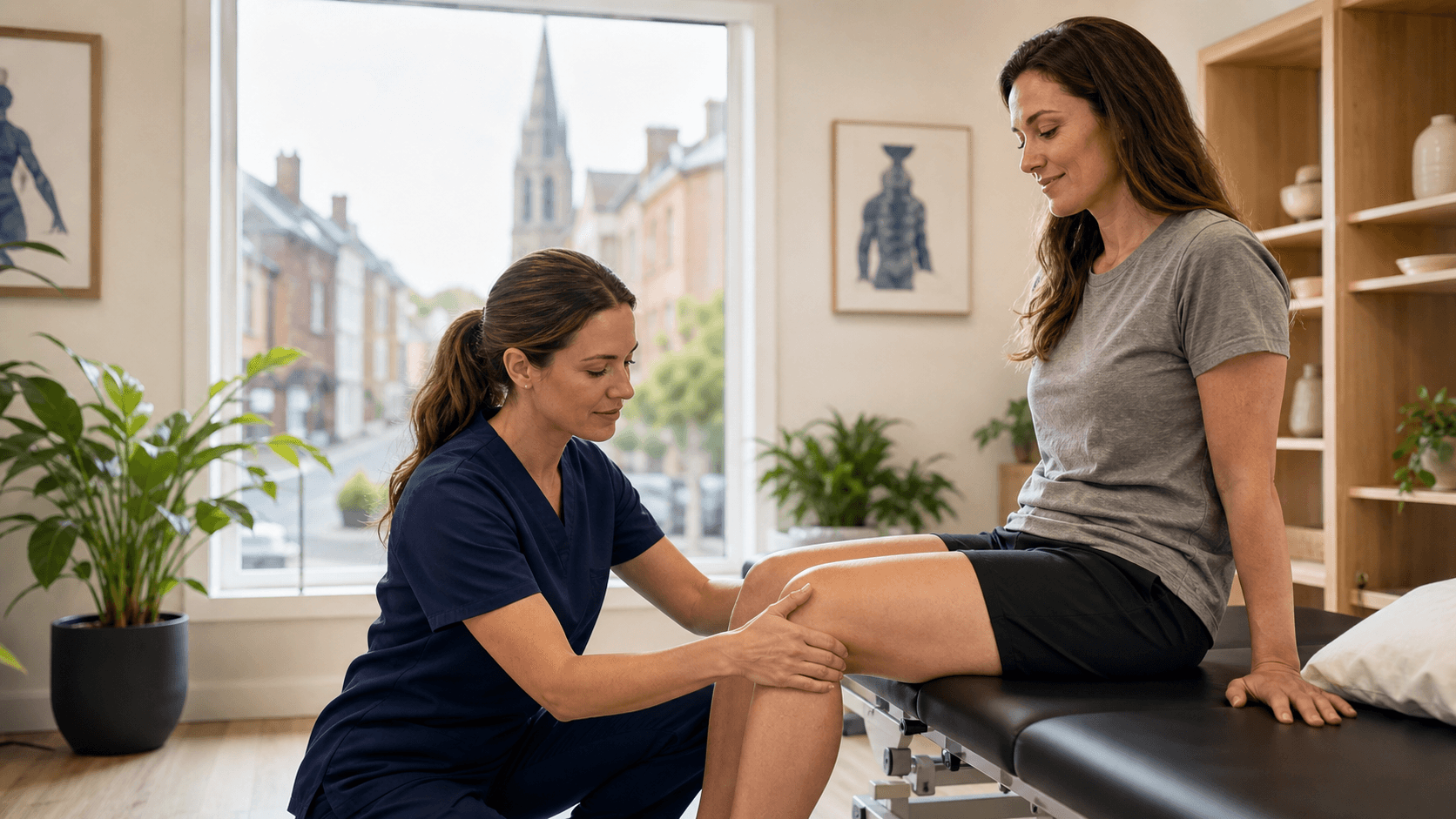
A first visit for knee pain at a chiropractic clinic normally includes a detailed chat about your symptoms, daily habits and goals, followed by a full assessment. We would look at:
- Posture while standing and sitting
- How you walk, including stride length and foot placement
- Movement and strength at the hip, ankle and lower back
- Specific joint and soft tissue tests around the knee
Once we have a clear idea of what is going on, we explain our findings in simple terms and suggest a plan. This might include gentle joint adjustments where suitable, hands-on work to tight muscles and fascia, and, when appropriate, acupuncture or dry needling to help ease pain and muscle tension.
Targeted exercises are often part of care. These can help build strength in key muscles, improve balance and support better movement patterns, so your knee is less likely to complain when you are back on hills, stairs or the football pitch. We may also suggest simple changes at home or work, such as pacing activities or tweaking your sitting position, to take some strain off the joint.
Good care rarely works in isolation. Chiropractic treatment can sit alongside massage, guided home exercise and input from your GP or other health professionals. Joined-up care aims to keep you safe, well informed and moving in the right direction.
Take Your Next Step Towards Pain-Free Walking
Knee pain has a habit of creeping into the things you enjoy. A favourite local walk starts to feel longer, stairs feel steeper, playing with children, or joining in sport feels less fun and more like a chore. Acting while the pain is still a niggle is usually easier than waiting until every step is a struggle.
It helps to do a simple self-check. Look back over the red flags listed earlier. If you recognise any of the serious signs, it is best to seek urgent medical advice before any hands-on treatment. If those do not apply but your knee keeps grumbling, clicks more than it used to or feels stiff and sore after normal days out around Lichfield, that is still your body asking for attention. Most knee problems respond well to the right mix of careful hands-on care, sensible movement, and small lifestyle tweaks, and you do not have to just live with it as the seasons change.
Take The First Step Towards Easier, More Comfortable Movement
If knee pain is limiting your day-to-day life, we are here at The Chiropractic Studio to help you move with greater ease and confidence. Our tailored approach to knee pain treatment in Lichfield focuses on addressing the underlying causes, not just the symptoms. Book an appointment today or contact us to discuss how we can support your recovery.